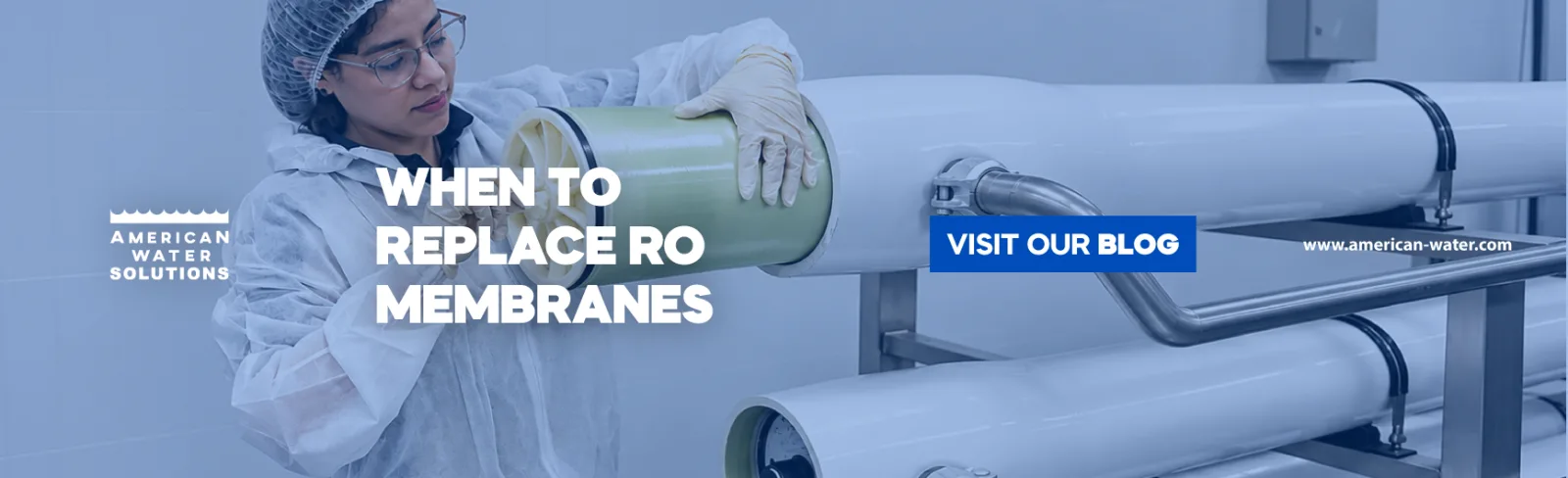
Reverse osmosis (RO) membranes play a critical role in removing dissolved salts, contaminants, and other impurities from water. However, even with proper maintenance, membranes gradually lose performance over time. Knowing when to replace them helps maintain water quality, system efficiency, and reliable operation.
1. Declining Permeate Flow
One of the first signs of membrane deterioration is a reduction in permeate flow, the amount of purified water the system produces. Fouling, scaling, and membrane aging can restrict water passage and reduce production capacity.
Before replacing membranes, check operating conditions and determine whether cleaning can restore performance.
2. Increasing Salt Passage
RO membranes are designed to reject dissolved salts and other impurities. If permeate conductivity increases or salt rejection decreases, the membranes may be damaged, worn, or compromised by improper operation.
Monitoring conductivity and salt rejection helps identify performance changes before they affect downstream processes.
3. Rising Operating Pressure
When membranes become fouled or scaled, the system may require higher feed pressure to maintain the same production rate. This can increase energy consumption and operating costs.
Compare pressure, differential pressure, and normalized performance data against the system's baseline to determine whether cleaning or replacement is necessary.
4. Cleaning No Longer Restores Performance
Routine cleaning can remove certain deposits and contaminants, helping restore membrane performance. However, when repeated cleanings fail to recover normalized flow, salt rejection, or pressure drop, replacement may be necessary.
Always follow the membrane manufacturer's cleaning guidelines to avoid unnecessary damage.
5. How Long Do RO Membranes Last?
RO membrane lifespan varies depending on feedwater quality, pretreatment effectiveness, operating conditions, maintenance practices, and cleaning frequency. Under suitable conditions, membranes may last several years, but there is no universal replacement schedule.
Rather than relying on age alone, evaluate performance trends and follow the manufacturer's recommendations.
Extend Membrane Life Through Proper Monitoring
Replacing RO membranes too early can increase costs, while delaying replacement can compromise water quality and system efficiency. Regular monitoring of permeate flow, conductivity, pressure, and normalized performance helps determine the right time to act.



American Water Solutions, LLC is a Texas-based company specializing in reverse osmosis water treatment systems for residential, commercial, and industrial applications.