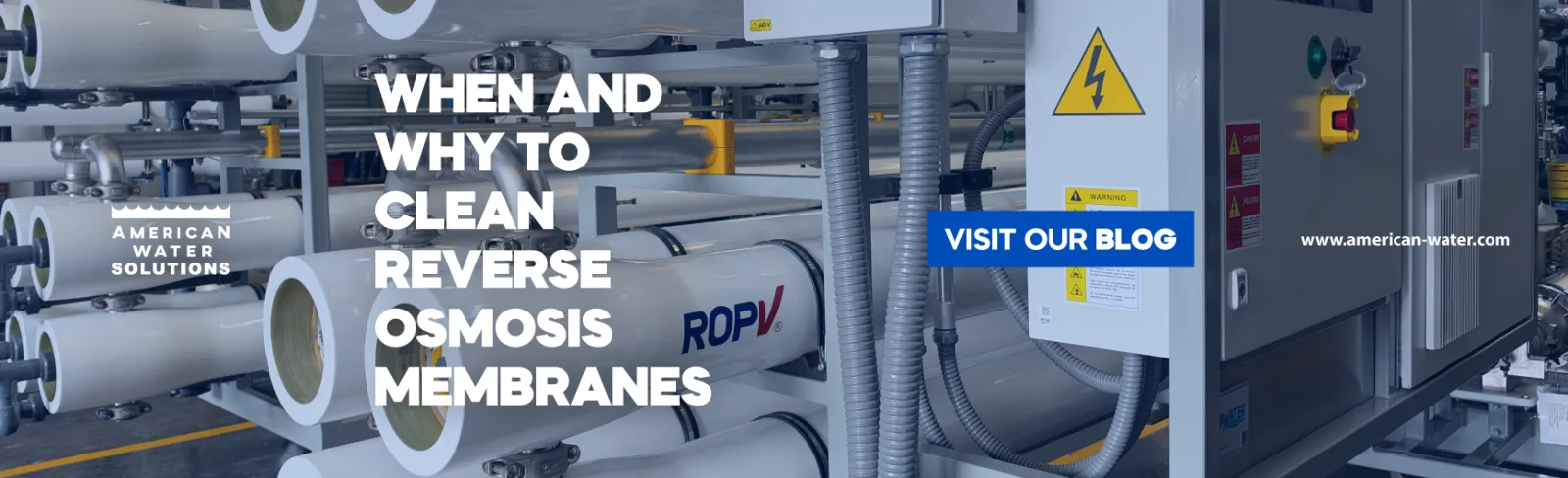
Even with good pretreatment, reverse osmosis membranes gradually collect deposits. Cleaning them at the right time helps restore performance and extend their service life.
Signs That Membranes Need Cleaning
Membrane manufacturers generally recommend cleaning when one of these changes appears compared to normal operation:
Water production drops 10% to 15%
Salt passage increases 5% to 10%
Pressure differential rises 10% to 15%
These values should be compared using normalized data, which accounts for changes in temperature and pressure.
Types of Membrane Cleaners
The right cleaner depends on what is fouling the membrane. High-pH cleaners remove organic matter, biofilm, and silt. Low-pH cleaners remove mineral scale and metals such as iron.
Why Timing Matters
Waiting too long makes deposits harder to remove and can permanently reduce membrane performance. Cleaning too often, on the other hand, may point to a pretreatment problem that should be corrected.
A Controlled Process
Membrane cleaning is typically done through a clean-in-place system that circulates the cleaning solution through the membranes at controlled flow, pH, and temperature, following the manufacturer's limits.



American Water Solutions, LLC is a Texas-based company specializing in reverse osmosis water treatment systems for residential, commercial, and industrial applications.