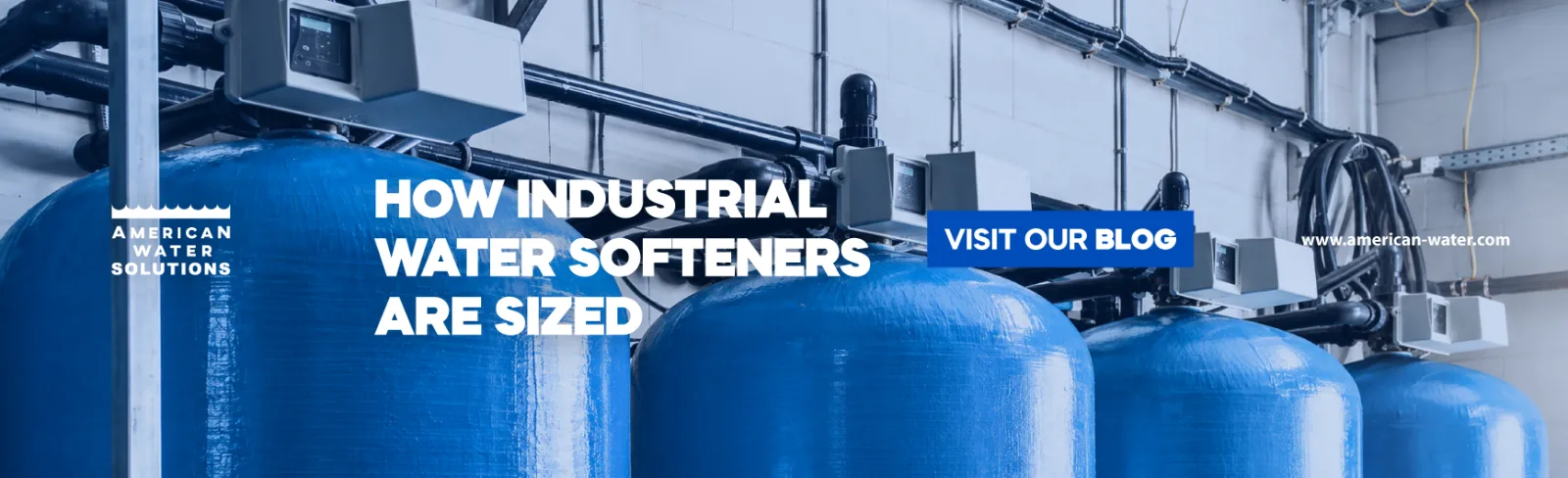
Hard water can leave scale in boilers, heat exchangers, and reverse osmosis membranes. An industrial water softener prevents this, but only when it's sized correctly for the water and the operation.
Water Hardness
Sizing starts with knowing how much calcium and magnesium the water contains. Hardness is often reported in mg/L and converted to grains per gallon by dividing by 17.1.
Daily Water Use
The amount of water the facility uses each day, including peak days, determines the total hardness the softener must remove. Multiplying hardness by daily water use gives the daily hardness load.
Resin Capacity
Softening resin can remove a limited amount of hardness before it needs regeneration with salt. Its capacity depends on the amount of salt used. Lower salt doses use salt more efficiently, while higher doses increase capacity.
Choosing the Right Configuration
Common options include:
Single tank systems, for operations that can pause during regeneration
Twin alternating systems, which keep one tank in service while the other regenerates
Multi-tank systems, for high or variable flow rates
For continuous operations, twin alternating systems with metered regeneration help provide soft water at all times while reducing salt and water use.



American Water Solutions, LLC is a Texas-based company specializing in reverse osmosis water treatment systems for residential, commercial, and industrial applications.